
Thousands of franchise business opportunities exist right now, but most prospective owners don’t have a reliable method for evaluating which ones actually generate strong returns. The answer isn’t a single brand name.
The most profitable franchises to own share specific, measurable characteristics that separate high-return investments from operations that trap owners in thin margins and slow payback timelines.
This guide breaks down the key factors to evaluate before committing capital and explains why certain industries, including home services, consistently outperform others.
What Makes a Franchise Profitable?
A profitable franchise combines low overhead, strong consumer demand, efficient operational systems, and a proven brand. Profitability depends not just on revenue but on net margins. This includes what the owner actually keeps after royalties, fees, labor, and operating costs. The best franchise opportunities deliver consistent returns across different markets and economic conditions.
Revenue alone doesn’t tell the full story. A $2M-revenue franchise carrying 30% in combined royalties and high labor costs may return less to the owner than a $500K home services operation running lean with 15–20% net margins. Industry benchmarks reinforce this gap. Food and QSR franchises often run 6–9% net margins, while home services franchises can achieve 15–20% or higher due to lower overhead and recurring demand.

Key Factors to Evaluate Before Buying a Franchise
Before comparing brands, smart investors evaluate opportunities against a consistent set of criteria. These factors separate high-return franchise business opportunities from ones that underperform.
Initial Investment vs. Realistic Return
Total investment includes the franchise fee, equipment, inventory, real estate or vehicle costs, working capital, and initial marketing spend. The key metric to focus on: full ROI within 3–5 years. A franchise requiring a $300K total investment should generate enough net profit to recover that capital within the window.
Be cautious with high-revenue franchises that still carry poor ROI when startup costs are disproportionate to long-term margins. Comparing the investment risk of franchising against starting independently can also clarify the value of a proven system.
Learn more about franchises vs. your own ground-up business.
Royalty Rates and Ongoing Fees
Royalties typically range between 4–12% of gross revenue. At 10% or above, a franchisee must generate significantly higher revenue to achieve the same take-home as a lower-royalty competitor.
Factor in additional costs too: marketing fund contributions, technology fees, required vendor purchasing, and renewal fees. These recurring expenses compound over time and are the primary reason two franchises with similar gross revenue can have very different profitability profiles.
Territory Size and Market Demand
Exclusive or protected territories limit competition with other franchisees and the franchisor itself. Larger territories paired with strong demand enable multi-unit growth, one of the most reliable drivers of long-term franchise wealth.
Market demand should be need-based, not discretionary. Services people require, regardless of economic conditions, consistently outperform luxury or trend-dependent categories.
Franchisor Support Systems
Strong support systems reduce the learning curve, marketing cost, staffing missteps, and operational errors that erode margins in the early years of ownership. Evaluate the quality of onboarding training, ongoing operational support, proprietary technology, group purchasing power, and marketing assistance a franchisor provides.
Franchisors with proven systems hand owners a repeatable process, removing the guesswork that kills independent startups.
How to Read the FDD Before You Invest
Every franchisor operating in the U.S. is legally required to provide a Franchise Disclosure Document (FDD) before any money changes hands. Knowing which sections to prioritize saves time and reveals whether an opportunity is worth pursuing.
- Item 19 — Financial Performance Representations: Covers financial performance representations and is the most critical section. Not all franchisors include it, but those that do provide average revenues, gross profits, or EBITDA data across existing locations. Use this data to model realistic income projections. Learn more about Item 19 financial performance representations.
- Item 7 — Estimated Initial Investment: Breaks down the estimated initial investment in full. Compare these figures against Item 19 data to calculate a realistic ROI timeline.
- Item 20 — Franchisee Contact List: Provides a franchisee contact list. Reach out to current and former franchisees directly. A declining number of operating units is a red flag regardless of the franchisor’s explanation.
- Item 21 — Franchisor Financial Statements: Includes the franchisor’s audited financial statements, confirming the company is financially stable enough to deliver on its support promises. A struggling franchisor cannot adequately fund training, technology, or marketing assistance.
The FDD is a legally mandated disclosure, not a sales document. Review it with a franchise attorney before signing anything.
Why Home Services Franchises Consistently Rank Among the Most Profitable
Home services stands out as a high-return franchise category for clear reasons such as low overhead (no retail storefront required), strong recurring demand, need-based purchasing behavior, and the ability to scale by adding crews rather than additional brick-and-mortar locations.
Homeowners continue to invest in property improvements in both strong and slow economies. Fencing, in particular, is often a required upgrade, not an optional luxury. This need-based demand creates a stable revenue floor that discretionary categories simply can’t match.
Compare this to food franchises, which typically carry high startup costs, thin margins, complex labor management, and significant waste. Home services operations often require less capital, fewer employees at launch, simpler logistics, and a shorter path to profitability. According to the International Franchise Association, home services remains one of the franchise sector’s strongest-performing categories.
For investors exploring this space, a low-cost franchise opportunity in home services can offer a lower barrier to entry compared to food or retail concepts.
What to Look for in a Fence Franchise
For investors evaluating outdoor home services, fence franchises check every core profitability criterion covered in this guide like low overhead, need-based demand, scalable operations, and strong brand support. The evaluation framework above applies directly.
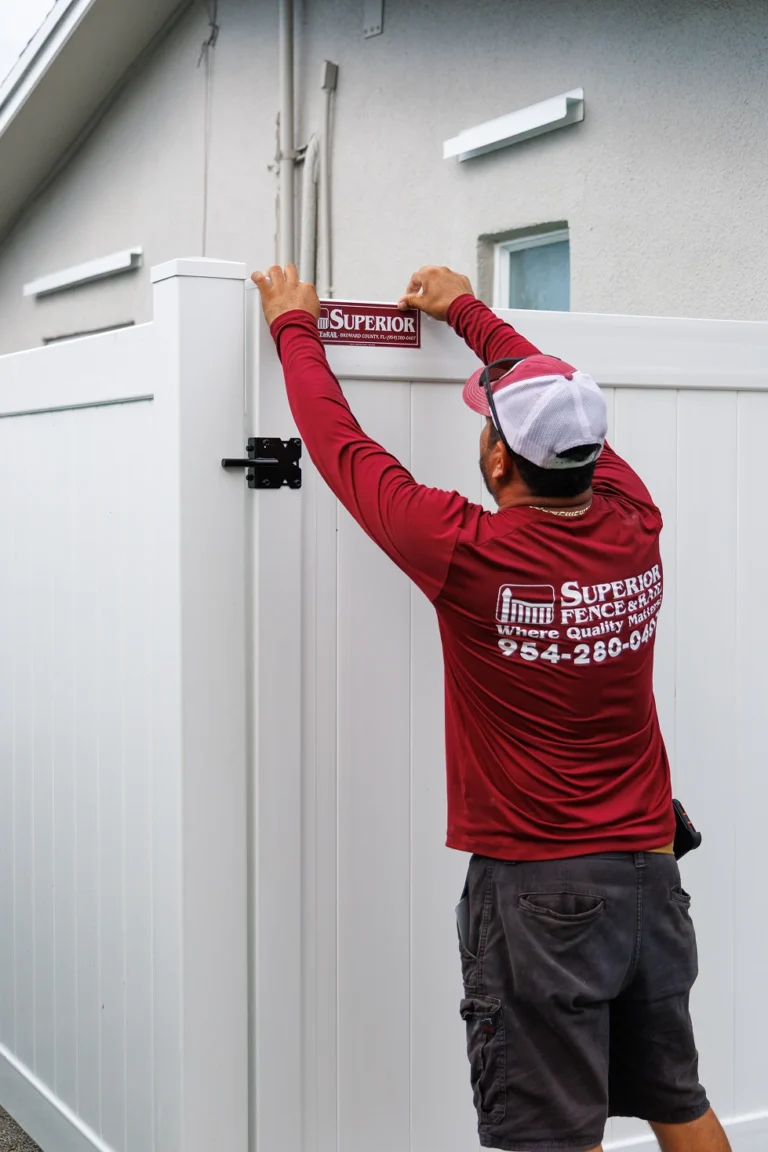
Superior Fence & Rail has spent 20+ years building proven systems in the fencing industry. Group buying power keeps product costs low and margins strong. Proprietary software streamlines day-to-day operations and reduces administrative overhead, while quick project turnaround (often same-day completion) accelerates revenue cycles and increases job volume.
No prior fencing experience is required. Training covers operations, sales, marketing, and customer acquisition in full. The business model serves both residential and commercial clients, creating diversified revenue streams that reduce reliance on any single market segment.
As one of the largest fence companies in the country, Superior Fence & Rail has earned thousands of 5-star reviews across its locations. Explore the fence franchise opportunity to see how the model aligns with your investment goals.
FAQs — Most Profitable Franchises
What are the most profitable franchises to own?
Home services, senior care, and business services franchises consistently produce the strongest net margins (often 15–20%) due to lower overhead, recurring demand, and lean staffing models. Food franchises generate high revenue but typically carry thinner margins (6–9%) after food costs, labor, and royalties. The most profitable franchise for any individual depends on their available capital, local market demand, and operational bandwidth.
How much profit can a franchise owner make?
Franchise income varies significantly by industry, territory size, and operational execution. According to Franchise Business Review data, roughly 25% of franchisees in top-rated systems report annual incomes of $150,000 or more. Home services and low-overhead franchises tend to reach profitability faster than capital-intensive categories like restaurants or fitness centers.
What is the best franchise to buy for first-time owners?
First-time owners typically do best with franchises that offer strong onboarding training, operational systems, and ongoing support. These elements reduce the learning curve that erodes margins in early years. Home services franchises with lower initial investment thresholds and need-based demand are among the most accessible and resilient starting points.
How do I know if a franchise is actually profitable before I buy it?
Request and review the franchisor’s Franchise Disclosure Document (FDD), specifically Item 19 (financial performance representations) and Item 20 (franchisee attrition data). Contact current and former franchisees listed in Item 20 to get candid information about real-world margins. A franchise attorney should review the FDD before you sign any agreement.
Are home services franchises profitable?
Yes. Home services is consistently ranked among the highest-return franchise sectors. Low overhead, no retail storefront requirement, and strong recurring demand allow home services franchisees to achieve net margins that outpace food, retail, and many other categories. Fencing, in particular, benefits from need-based demand that holds up in both strong and weak economic environments.
Take the Next Step
Superior Fence & Rail combines every profitability characteristic outlined through this guide. This means franchisees get low overhead, need-based demand, proven systems, group buying power, and strong franchisor support. No prior fencing experience is required, and the inquiry process is completely pressure-free.